




How to Invest Money for the First Time: A Beginner’s Guide That Actually Works

Most people think you need thousands of dollars and a finance degree to start investing. You don’t. A friend of mine started with just $50 a month in an index fund at age 24 — by 34, that account had grown to over $9,000 without him doing anything extra. That’s the quiet power of investing early.
If you’ve been putting off learning how to invest money for the first time, this guide breaks it down simply, practically, and without the confusing jargon.
Why You Should Start Investing Now (Even with Little Money)
The biggest mistake beginners make is waiting until they feel “ready.” Here’s the truth: time in the market beats timing the market. Every year you wait costs you compounding returns you’ll never get back.
Even $25–$100 a month adds up significantly over 10–20 years thanks to compound interest — where your returns earn their own returns.
How to Invest Money for the First Time: Step-by-Step
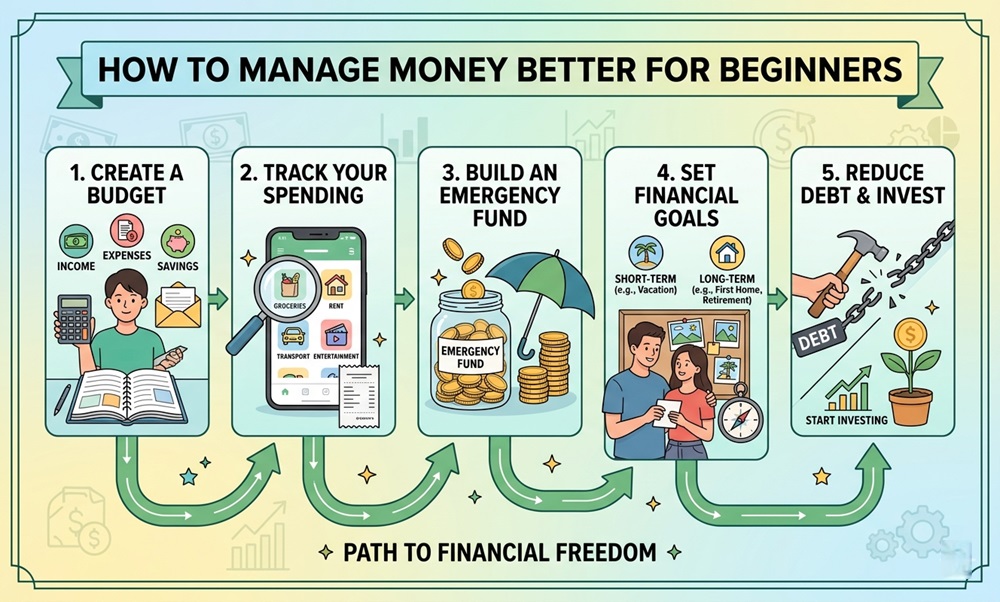
Step 1: Build Your Financial Foundation First
Before you invest a single dollar, make sure:
- You have an emergency fund covering 3–6 months of expenses
- High-interest debt (like credit cards) is paid off or under control
- You have a stable income, even if small
Investing while carrying 20% APR credit card debt is like filling a bucket that has a hole in it.
Step 2: Define Your Investment Goal
Ask yourself: Why am I investing?
- Retirement (10–30 years away): Higher risk tolerance; more stocks
- House down payment (3–5 years): Balanced approach; some bonds
- Short-term savings (1–2 years): Keep it conservative; high-yield savings accounts
Your goal determines your strategy.
Step 3: Choose the Right Account Type
| Account | Best For | Tax Benefit |
|---|---|---|
| 401(k) / EPF | Retirement via employer | Pre-tax contributions |
| Roth IRA | Long-term retirement | Tax-free growth |
| Brokerage Account | General investing | Flexible, no caps |
| Index Fund (SIP) | India/global beginners | Diversified, low-cost |
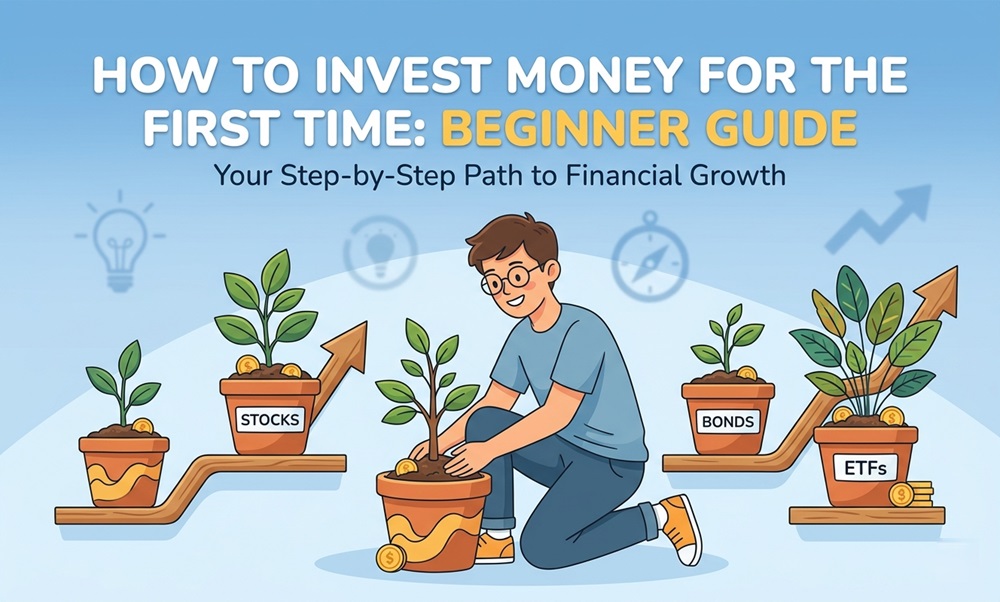
Step 4: Start with Index Funds or ETFs
For beginners, index funds are the smartest starting point. They:
- Track the entire market (like the S&P 500 or Nifty 50)
- Have extremely low fees (0.03%–0.2%)
- Require minimal management
- Outperform most actively managed funds long-term
Platforms like Fidelity, Vanguard, Zerodha, or Groww make this simple.
Step 5: Automate Your Contributions
Set up a monthly auto-debit. Treat investing like a bill you pay yourself first. Even ₹500 or $25/month creates a lasting habit that grows over time.
Pro Tips for First-Time Investors
- Don’t chase “hot stocks.” The headlines always arrive too late.
- Reinvest dividends. This accelerates compounding dramatically.
- Review once a quarter, not daily. Checking too often leads to emotional decisions.
- Start with one fund. You don’t need a complex portfolio on day one.
Common Mistakes to Avoid
- Trying to time the market — nobody does this consistently, not even professionals
- Investing money you might need soon — markets can drop 20–30% in the short term
- Ignoring fees — a 1% fund fee vs a 0.1% fee makes a massive difference over 20 years
- Selling during a crash — downturns are normal; long-term investors profit by staying put
FAQs
Q: How much money do I need to start investing? You can start with as little as $1–$10 on platforms like Robinhood, Groww, or Fidelity. The amount matters less than starting early.
Q: Is investing safe for beginners? All investing carries risk, but diversified index funds carry significantly less risk than individual stocks. Risk decreases substantially over longer time horizons.
Q: What’s the best investment for a complete beginner? A low-cost total market index fund or ETF (like VOO, NIFTYBEES, or similar) is widely recommended for beginners by most financial experts.
Q: How long before I see returns? Investing is a long game. Expect meaningful growth over 5–10+ years. Short-term fluctuations are normal and should be ignored.
Conclusion
Starting your investment journey doesn’t require wealth or expertise — it requires action. Open an account, pick a simple index fund, set up a monthly contribution, and leave it alone. Your future self will thank you.